Terpenes and Siloxanes
About
Biogas and biomethane play a key role in the global strategy to protect our planet by switching from fossil fuels to greener energy sources. DESOTEC’s sustainable mobile filtration services purify biogas from terpenes and siloxanes. This allows its upgrading to biomethane, which is a sustainable fuel. Before using biogas to power machinery or upgrading it into biomethane, terpenes and siloxanes must be removed to protect equipment and workers’ health. DESOTEC's sustainable full-service mobile filtration solutions will help your firm produce top-quality biofuel for a healthier and greener future.
What are siloxanes and terpenes?
Biogas and biomethane must reach consistently high standards. Yet, as they’re derived from organic waste, they contain impurities. DESOTEC has the solution. Our filters handle a range of contaminants, including two of the most common: siloxanes and terpenes.
Siloxanes are volatile liquid compounds that do not biodegrade easily. They’re used in cosmetics, deodorants, water repellents, food additives, and soaps, so are often found in the biogas stream produced at wastewater treatment plants (WWTPs).
Terpenes usually come from the fermentation of green waste, including fruit, vegetables, and agricultural by-products. They may also be derived biosynthetically from isoprene for use as fragrances in cosmetics.
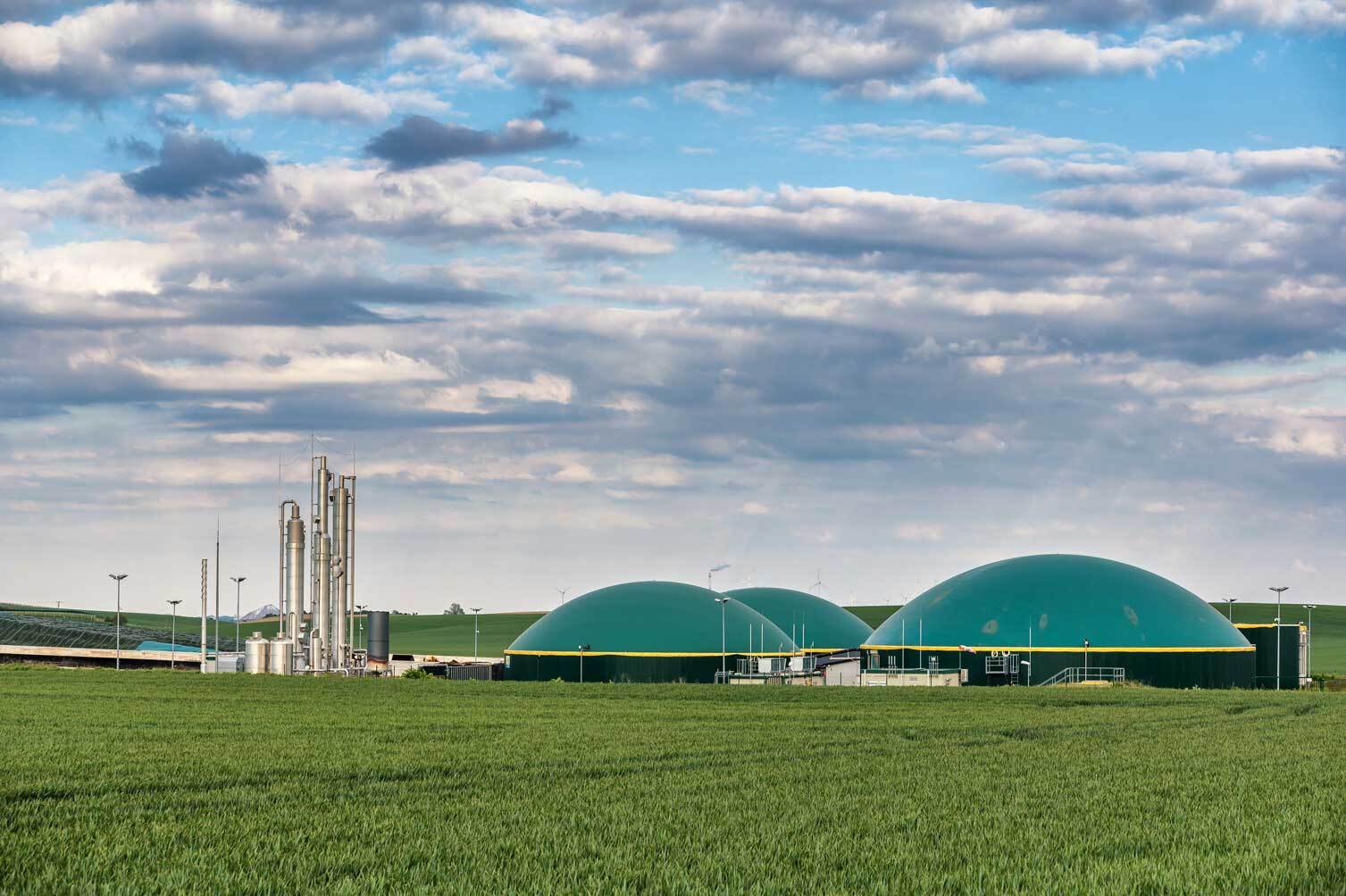

Filtering siloxanes from biogas
Every company wants to protect its machinery and equipment, reducing maintenance costs and repair bills. Yet, siloxanes give rise to abrasive silica (sand-like) deposits when combusted in machinery such as combined heat and power engines (CHP). If these sandy deposits exceed the manufacturer’s stated limits, they reduce the lifespan of this important and expensive equipment.
DESOTEC offers a simple solution. Our filters purify the biogas stream from siloxanes, so it can be fed into a CHP to produce low-carbon energy. As other compounds, such as hydrogen sulfide (H₂S), are likely to be present in the biogas stream, multiple filters may be placed in series.
Filtering terpenes from biomethane
We all love the smell of Christmas trees, which are produced by natural terpenes. In high concentrations, though, these compounds are an odour nuisance for workers and neighbours. So, it’s essential to purify biogas from terpenes to keep the air smelling fresh.
Plus, removing terpenes is necessary to protect the membranes used to upgrade biogas into biomethane and prevent gaskets and piping systems from corrosion.
DESOTEC is here to help. Our mobile activated carbon filters adsorb terpenes and siloxanes, allowing biogas to be upgraded into biomethane. The latter can then be injected into the national grid or converted into compressed natural gas (Bio-CNG) or liquified natural gas (Bio-LNG) for use as transport fuel.
Biogas and biomethane play a key role in the global strategy to protect our planet, by switching from fossil fuels to greener energy sources. DESOTEC’s sustainable mobile filtration services filter biogas from terpenes and siloxanes. This allows its upgrading to biomethane, which is a sustainable fuel.
Helping you comply
Legislation governing air quality (including emissions of volatile organic compounds (VOCs), terpenes, and siloxanes) is becoming increasingly stringent. DESOTEC filters are modular, so they can easily be adapted to help you reach lower limits, thus future-proofing your company.
Odour control tends to be governed at the country level. The Nordics have especially strict regulations, but other countries are following suit.
Manufacturers set guidelines for using their machinery, including CHP engines. If you exceed their stated limits for terpenes and siloxanes, you will invalidate your warranty. By installing DESOTEC filters, you extend the lifespan of your equipment and cut your costs.
Frequently Asked Questions about Terpenes and Siloxanes
-
Activated carbon filtration is an effective way to purify biogas of siloxanes, which generate abrasive silica when combusted in downstream machinery such as combined heat and power (CHP) engines. DESOTEC filters are ideal for the task, and can handle the discontinuous gas flows and varying concentrations typical of biogas applications. Biogas from wastewater treatment plants (WWTPs) is highly likely to contain siloxanes, which are found in cosmetics, deodorants, water repellents, food additives, soaps and other products.
-
Activated carbon is recognised as the Best Available Technology (BAT) to purify biogas of terpenes, which can cause an odour nuisance at high concentrations and corrode downstream equipment. Terpenes are generated by the fermentation of green waste or derived biosynthetically from isoprene in cosmetic fragrances, so may be present in high concentrations in biogas. DESOTEC filters can be used as part of the process of upgrading biogas into biomethane for injection into the national grid, or conversion into compressed natural gas (CNG) or liquefied natural gas (LNG).
-
Biogas production is governed by odour and air quality legislation that is likely to become more stringent in the coming years – but activated carbon is a reliable technology to future-proof your business. DESOTEC offers advice and expertise along with modular filtration technology that can be expanded to suit changing parameters or regulations. Our solutions also enable you to meet the terms of manufacturers’ warranties for downstream equipment. Compliant waste handling is included in our service, sparing your company hassle and enabling you to focus on producing renewable energy.
-
Activated carbon is recognised as the Best Available Technology for biogas purification, and is often the most cost-effective and sustainable option – especially in the following situations:
- Where production is discontinuous, activated carbon is generally more cost-effective than alternatives such as thermal oxidisers (RTOs).
- If space is tight, DESOTEC filters have a smaller footprint than most alternatives.
- For short-term usage, our filters are mobile and rental – unlike more permanent installations such as RTOs.
- If treatment is needed immediately, our filters can be delivered fast and are plug-and-play – some alternatives have a lengthy lead-in time.
- If your needs might change in the future, our systems are modular – other technology might be less adaptable.
- If flow rates, concentrations and compounds are changeable, activated carbon is generally more versatile than alternatives.
DESOTEC is keen to help customers find the best treatment for their needs, and our experts will tell you if they think another technology might be more suitable than activated carbon.
-
Activated carbon is a very versatile technology, so there are many ways to optimise set-ups – e.g. placing filters in series, using different carbon grades, or combining filters with complementary technology such as scrubbers.
DESOTEC solutions offer a low total cost of ownership (TCO): capex costs are minimal, and testing, maintenance, upgrading and ongoing support are included in our service. Sustainable carbon waste handling is also included, with carbon reactivated for reuse wherever possible at our state-of-the-art facilities. This cuts your costs and further closes the loop in renewable energy production, boosting sustainability.
How we help you
DESOTEC sustainable mobile filtration solutions
DESOTEC is proud to help companies produce quality biogas and biomethane to aid the shift to climate-friendly energy. Activated carbon is certified as the Best Available Technology (BAT) for upgrading biogas into biomethane.
Our filters are simple to install and exchange, meaning that costly downtime is minimised. They’re easy to operate, so you don’t need expert personnel on site. DESOTEC experts are just a phone call away, 24/7/365.
Our full-service solutions include handling filtration waste. All adsorbed molecules are destroyed, and carbon is reactivated wherever possible. This circular solution is both cost-effective and sustainable, making your company’s practices more profitable and greener.
DESOTEC helped us upgrade our biogas stream so it's usable in the main gas grid. Thanks to their flexible solution we could adapt quickly.

Our filtration solutions
Flexible, mobile solutions configured to meet your industrial purification needs. With sustainable waste management included, it’s easy to reach your green goals.
-
Industries we help
We partner with companies in a variety of sectors, adapting our modular filtration solutions to your unique needs. -

Our unique service
Our closed-loop, full-service model is as unique as your business needs. We’ll define the right filtration setup and safely recycle filtration waste, making it easy to go green. -

Your sustainability journey
We care about protecting our air, water and soil for future generations, just like you. Our filtration solutions help you meet environmental standards, reducing your carbon footprint.