How Innovative Activated Carbon Made in Europe is Shaping the Circular Future of Biogas
Wet scrubbing has always been the industry standard for removing hydrogen sulfide (H2S) from biogas. Nevertheless, DESOTEC’s circular EU-based production of activated carbon led to a more cost-effective and greener alternative. In this article, we’ll present the advantages of this desulphurization technology. Before digging into that, let’s look at the importance of removing H2S from biogas.
Why Is Desulphurization Important For Biogas Producers?
H₂S has a foul smell and this often leads to neighbour complaints and, in the worst case, to a biogas plant losing its permit. For biogas producers more specifically, H₂S also implies a financial threat as it can damage the upgrading equipment (typically membranes). Therefore, to ensure that biomethane meets requirements for injection into national gas grids (H₂S level below 5 ppm), membranes will have to be protected by an additional removal unit upstream such as activated carbon filtration.


Which Are The Benefits of Activated Carbon Filtration vs Wet Scrubbing?
When it comes to H₂S removal, mobile activated carbon filtration implies a number of advantages compared to wet scrubbing.
To begin with, mobile activated carbon units are cheaper to operate. Scrubbing units have to be checked daily by several operators to avoid and/or resolve potential clogging issues. Instead, mobile activated carbon filters are emptied off-site, therefore being faster, cleaner and safer to exchange.
In addition to this, once installed, the units do not require any maintenance, thus saving time and money for taking care of production.
Furthermore, tapping into activated carbon filtration means removing both H₂S and volatile organic compounds (VOCs) in 1 step. Conversely, if sticking with scrubbers, an activated carbon filter downstream is still needed to meet biomethane purity requirements.
An Innovative & Circular Way to Produce High-Quality Activated Carbon in the EU
A More Resilient and Cost-Effective Production
After years of R&D efforts, DESOTEC - leading provider of mobile filtration solutions in Europe - has brought activated carbon filtration to the next level. Besides using mobile units, we’ve developed a first-of-its-kind plant in Belgium that turns high-sulphur carbon into a new activated carbon of equivalent quality to the virgin one. The latter was verified by performing loading and kinetics tests in our lab.
As concerns our production process, the first step is to separate sulphur and any other pollutants from the spent carbon. In the second phase, the carbon is refined to be reused for biogas applications. By upcycling a costly waste into a European-made activated carbon, we are making biogas generation more resilient against raw materials shortages and tighter regulations. Moreover, biogas players are freed of waste treatment burden, thus resulting in a lower total cost of ownership (TCO).
Turning By-Products Into Valuable Resources: a Fully Circular Process
To make our process fully circular, we convert the recovered sulphur into gypsum that serves as raw material for the construction sector. According to our estimates, we could generate up to 25.000 tons of gypsum per year. By upcycling a by-product into a valuable product, we align even more with our sustainability commitments. In this regard, DESOTEC also integrated a turbine into our boiler, turning some of the waste steam into electricity.
Cutting Transport-Related CO₂ Emissions via Locally-Produced Activated Carbon
This innovative Belgian facility allows DESOTEC to source up to 80% less coal-based virgin activated carbon from outside Europe. Doing so, we reduce our CO₂ emissions as reported in the case studies below. Figures were estimated via a life cycle assessment (LCA) using the Bilan Carbone methodology.
Reducing Desulphurisation Cost and CO₂ Impact: Case Studies
Helping a Landfill Manager Double its Biogas Production
After doubling the amount of biogas generated by its landfill, a French company had to remove a more significant load of H₂S (average of 5.000-6.000 ppm with peak of >9.000 ppm). The landfill manager contacted DESOTEC to ask for a purification solution. We installed 3 mobile filters (AIRCON HC-XL) to treat the contaminated flow (800 Nm³/h). In addition to this, filters were packed with our innovative renewable carbon produced at our new production facility in Belgium. Besides reducing the client’s total cost of ownership (TCO) by 15% (no waste treatment needed), using an EU-made activated carbon vs a coal-based Asian product led to over 80% fewer CO₂ emissions.
Waste Management: Solving Two Problems in One Go
A company had to remove H₂S from its landfill-derived biogas before feeding it to a cogeneration plant to avoid damaging the engine. On top of that, they had to remove VOC prior to upgrading their biogas into biomethane to prevent membrane failure. To tackle both challenges, the landfill manager reached out to DESOTEC. We initially installed 2 mobile filters (AIRCON HC-XL) packed with a coal-based activated carbon sourced from Asia. However, the activated carbon was then swapped with our renewable activated carbon grade made at our EU production facility. This strategy enabled us to reduce the customer’s TCO by 22% as well as lowering CO₂ emissions by over 80%.
-

Our filtration solutions
We offer a wide range of filter models and carbon grades to suit your industrial water or air purification requirements. -
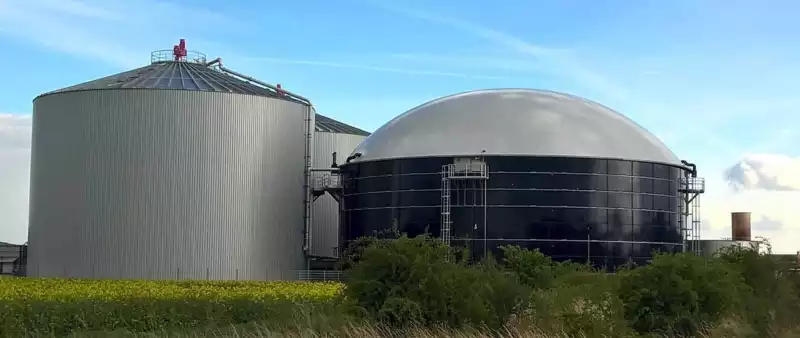
Biogas and renewable energy
Full-service, sustainable biogas and biomethane treatment to protect equipment, control odours, and make best use of natural resources. -
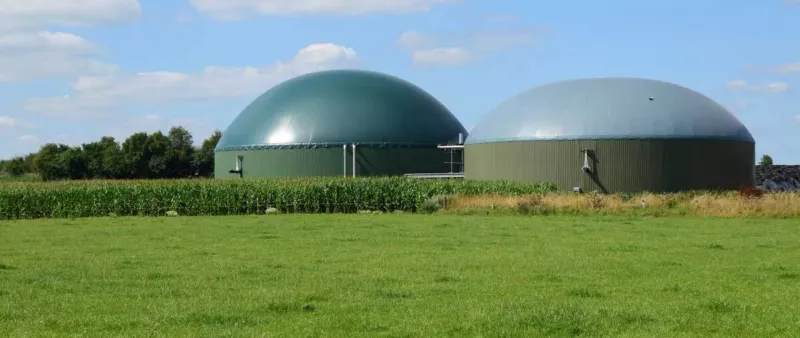
Hydrogen Sulfide (H₂S) Removal
Remove H₂S from air emissions and biogas using DESOTEC’s mobile activated carbon filtration system; reduce odours, protect equipment and prevent acid rain.