Hydrogen Sulfide (H₂S) Removal
About
Companies in sectors including waste management and biogas production need reliable solutions to treat H₂S and safeguard their business, workers, and neighbours. DESOTEC’s full-service mobile filtration solutions cover everything, from analysis to waste handling, protecting machinery and human health.
What is hydrogen sulfide?
Hydrogen sulfide results from the breakdown of organic matter through anaerobic digestion. Even at low concentrations, its rotten egg smell causes odour nuisances. Sewage and sludge at wastewater treatment plants (WWTPs) and rotting green refuse at waste management sites are common sources of H₂S emissions.
Apart from having a foul smell, H₂S is toxic, posing a serious occupational health risk. When reacting with water, it turns into sulphuric acid, which is corrosive. Plus, it’s flammable. So, it’s a priority for companies to find effective methods for removing H₂S and disposing of it safely.
DESOTEC is ready to help, supporting your firm with our full-service sustainable mobile filtration solutions. As H₂S is inorganic, we use special impregnated activated carbon to chemically adsorb it onto our filters.
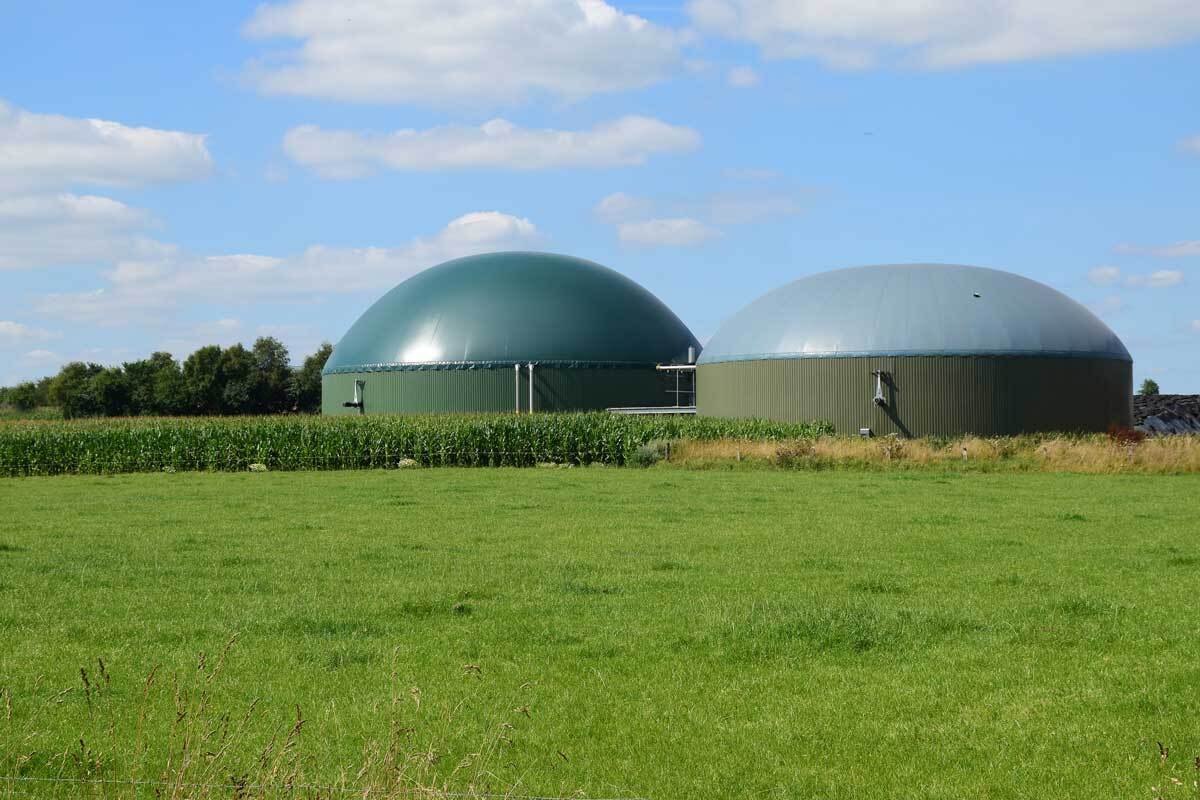

Hydrogen sulfide odour control
Nobody wants to live near or work at a facility that emits a sulfur smell. Sites where H₂S is unavoidable, such as WWTPs and biogas production plants, need to treat odour emissions to maintain good community relations, protect their reputation, and continue to do business.
As H₂S is often emitted with other components, the mixture treatment may require more than one technology, or multiple filters in series. For instance, scrubbers may be used to remove the bulk of the contaminants, before the gas stream is passed through the DESOTEC filter as a polishing step. The result is clean, fresh-smelling air.
DESOTEC’s sustainable mobile filtration services for odour removal can be sited at many other emissions sources, such as vents from tank storage. Our filters can handle discontinuous flows, thus working well for applications such as truck loading.
Biogas purification
Odour emissions are not the only problem that DESOTEC’s filters can solve. In biogas production plants, H₂S corrodes machinery such as combined heat and power (CHP) engines. H₂S can also damage the membranes used for biogas upgrading to biomethane.
Again, scrubbers might treat the bulk of the contaminants before activated carbon filters remove the residual molecules. DESOTEC installs filter set-ups designed for each unique site, e.g., separate filters containing different carbon types for volatile organic compounds (VOCs) and H₂S removal.
Hydrogen sulfide (H₂S) is a naturally occurring gas. Because of its sulfur smell and health effects, H₂S industrial emissions must be controlled. DESOTEC’s mobile filtration services can help you leave the air breathable and odour-free.
Helping you comply
DESOTEC’s sustainable mobile filtration services enable your company to comply with stringent air quality and occupational health legislations. Due to the toxicity and flammability of H₂S, site operating licences set out very low limits, so polishing with activated carbon filtration is often essential.
If odour complaints prompt action required by the environmental authorities, DESOTEC can quickly install filters that will take effect immediately.
In biogas and biomethane production, manufacturers set limits for how much H₂S their CHP engines, membranes or other equipment can handle. DESOTEC filters allow you to abide by this guidance, protecting your machinery and saving on maintenance costs.
Frequently Asked Questions about H₂S removal
-
Even at low concentrations, H₂S emits an unpleasant rotten egg smell – but activated carbon filtration is an effective way to treat this odour nuisance. DESOTEC supplies solutions for a huge range of common sources of H₂S in air emissions, such as wastewater treatment plants (WWTPs), tank storage, truck loading and unloading, and biogas plants.
We use specially impregnated carbon for H₂S chemisorption. As H₂S is often emitted with other components, you might need more than one type of treatment technology: e.g. scrubbers to reduce the bulk of components, then a DESOTEC filter for the H₂S. Another common set-up is to use multiple DESOTEC filters in series, filled with different carbon grades. Our filters can handle discontinuous flows and varying concentrations of components, making them a highly adaptable option.
-
Activated carbon is widely used to remove H₂S from biogas, protecting downstream equipment such as combined heat and power (CHP) machines or the membranes used to upgrade biogas into biomethane. You may require two DESOTEC filters filled with different carbon grades – one for volatile organic compounds (VOCs) and one for H₂S – or complementary technology such as a scrubber. We can advise you on the optimal set-up to meet the H₂S limits set by the manufacturer of your downstream equipment, ensuring efficient operation and cutting maintenance costs.
-
Activated carbon filtration is a reliable treatment for H₂S, which is governed by strict legislation due to its toxic, corrosive and flammable nature. Your company must comply with occupational health and safety regulations, odour controls, and environmental legislation to protect air quality and avoid the formation of acid rain. All of these laws might get stricter in the coming years. Plus, you need to stick to manufacturer’s warranties and guidelines for any downstream equipment.
DESOTEC has the expertise and technology to help you reduce H₂S to very low limits. Our filters can be delivered and installed rapidly to start work immediately in urgent situations, such as odour complaints. Additionally, we handle all waste carbon ourselves in compliance with relevant legislation, saving you hassle.
-
Activated carbon filtration is a Best Available Technology (BAT) for many purification applications, and is often the most cost-effective and sustainable option – but it does depend on various factors.
For example:
- Where air flow is intermittent, activated carbon is generally more cost-effective than alternatives such as thermal oxidisers (RTOs).
- If space is tight, DESOTEC filters have a smaller footprint than most alternatives.
- For short-term usage, our filters are mobile and rental – unlike more permanent installations such as RTOs.
- If treatment is needed immediately, our filters can be delivered fast and are plug-and-play – some alternatives have a lengthy lead-in time.
- If your needs might change in the future, our systems are modular – other technology might be less adaptable.
DESOTEC is keen to help customers find the best treatment for their needs, and our experts will tell you if they think an alternative technology might be more suitable than activated carbon.
-
Activated carbon is a very versatile technology, so there are many ways to optimise set-ups for H₂S removal – e.g. placing two filters in series to treat VOCs and H₂S, or combining filters with complementary technology such as scrubbers.
DESOTEC’s experts carry out testing, advise on set-up design, and offer ongoing support as part of our full-service solution. Our activated carbon filtration solutions have a low total cost of ownership (TCO): they have minimal capex costs, and our service includes maintenance, upgrading, and sustainable carbon waste handling. They enable your business to continue production uninterrupted, and prolong the lifespan of your downstream equipment.
-
Carbon waste with a high sulphur load requires careful management – and DESOTEC takes care of this for you as part of our full-service solution. Instead of disposal or incineration, we can reactivate this spent carbon safely in our groundbreaking new facility. The carbon produced this way is of the same quality as virgin carbon. Furthermore, we reuse water and heat from the treatment, and recycle by-products such as gypsum for plaster production, making this a highly sustainable and cost-effective process.
How we help you
DESOTEC sustainable mobile filtration solutions
DESOTEC’s full-service solutions let your company focus on its core business.
Our activated carbon filters are simple to install and exchange, requiring no production downtime. We have filters suitable for a range of flow rates, concentrations, and other process parameters.
Waste handling is part of our service. We have the expertise and equipment to manage H₂S safely, transporting it in closed units away from your site: the spent carbon is sent for safe disposal and valorisation. Our R&D team is continually working on ways to further boost sustainability.
DESOTEC helped us upgrade our biogas stream so it's usable in the main gas grid. Thanks to their flexible solution we could adapt quickly.

Our filtration solutions
Our mobile and modular purification service makes it simple to go green. Sustainable waste handling and 24/7 support are included, so you can focus on production.
-
Industries we help
We partner with companies in a variety of sectors, adapting our modular filtration solutions to your unique needs. -

Our unique service
Our closed-loop, full-service model is as unique as your business needs. We’ll define the right filtration setup and safely recycle filtration waste, making it easy to go green. -

Your sustainability journey
We care about protecting our air, water and soil for future generations, just like you. Our filtration solutions help you meet environmental standards, reducing your carbon footprint.