Flexible air emissions treatment in the battery recycling sector
Thanks to the green transition from fossil fuels to electric power, battery production and recycling are booming. But industrial recycling produces emissions that require purification to protect the quality of our air. DESOTEC’s mobile, modular and sustainable solutions for air emissions can be installed fast and will grow with your operations, as demonstrated by this case study from Germany.
Key takeaways
- DESOTEC works closely with customers, offering ongoing support and partnership so our solutions remain optimised to changing requirements.
- We take a holistic approach, combining our activated carbon solutions with complementary technology to deliver the best outcomes for clients.
- We offer rapid solutions in fast-growing sectors, enabling companies to get ahead of market trends.
The challenge
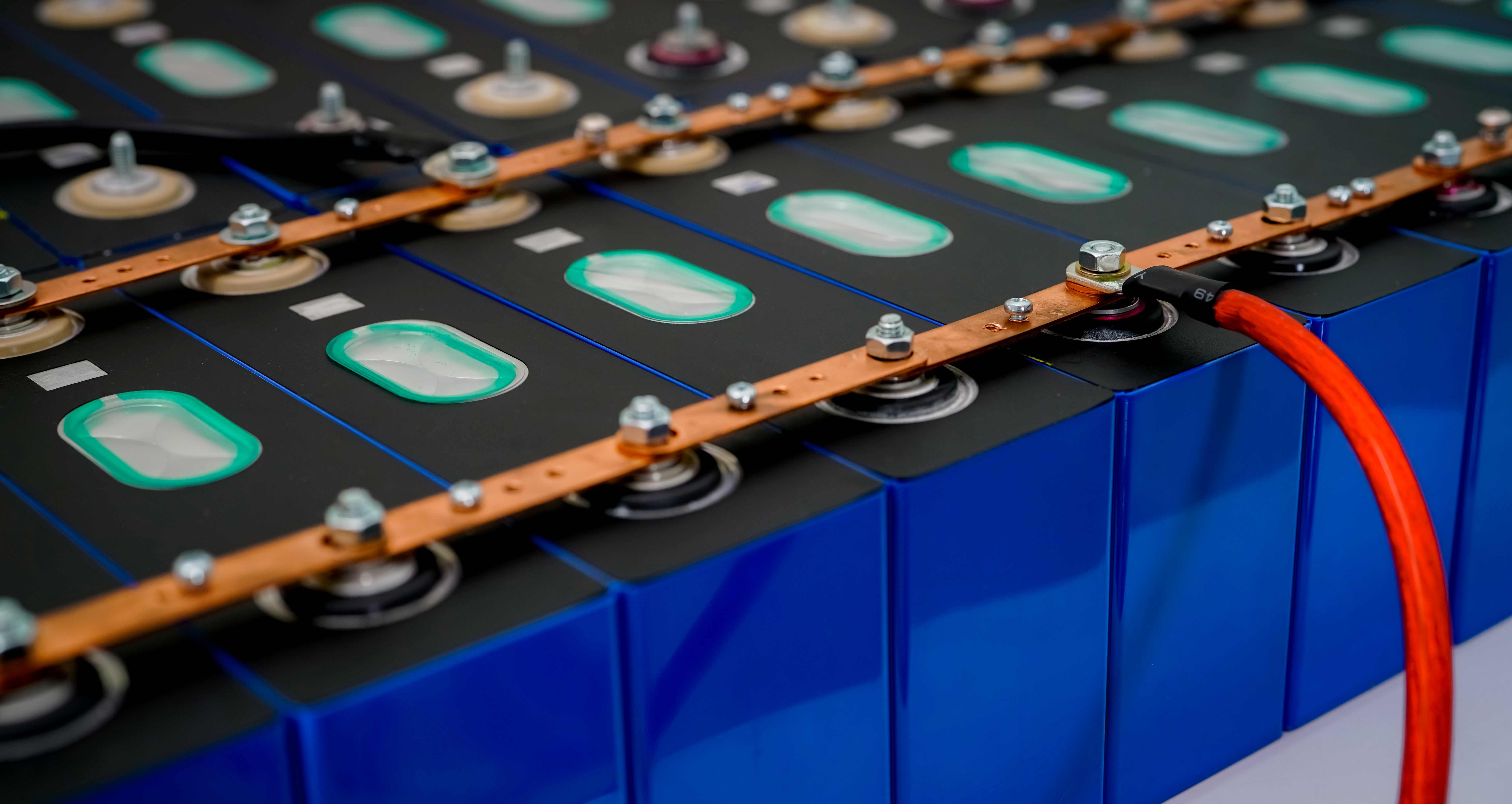
A multinational battery company bought a site in Germany to meet growing demand for battery recycling, especially the processing of end-of-life lithium-ion batteries from electric vehicles. The site already had waste handling permits: crucial to enable the company to get up and running fast.
Based on experience from its global operations, the company expected emissions from the shredding and drying processes at the German site to contain hydrofluoric acid (HF) and volatile organic compounds (VOCs), especially acetaldehyde, ethyl- and dimethyl carbonate (EMC/DMC), and N-Methyl-2-Pyrrolidone (NMP).
Concentrations would fluctuate greatly according to the type and volume of batteries being recycled, but could peak at: 1 mg/m³ of HF; 1.2 g/m³ of acetaldehyde; 50 mg/m³ of EMC/DMC; and 2 mg/m³ of NMP.
Therefore, the customer knew it would need rapid, flexible and effective solutions to meet stringent limits under Germany’s environmental regulations, TA Luft: 0 mg/m³ for HF; 20 mg/m³ for acetaldehyde and EMC/DMC; and 1 mg/m³ for NMP.
Company representatives met DESOTEC engineers at a trade fair and were impressed by our experience in the battery market and by the short lead-in time for our mobile filters. We began discussions about the forthcoming project.

The solution
At DESOTEC, our aim is always to enable customers to achieve optimal outcomes – even recommending technology that we do not supply ourselves.
In this case, we used calculations from the company’s existing global operations – both standard and worst-case scenarios – to determine the best set-up for the upcoming project.
On our advice, the client installed a scrubber to remove the bulk of the VOCs and HF from the air stream, along with dust. However, the scrubber cannot handle the acetaldehyde, or any peaks in concentration of VOCs and HF.
Therefore, the air is then passed through a DESOTEC AIRCON 2000 PE filter to remove the last traces of the HF: a highly corrosive compound that would damage downstream equipment (unless made of plastic, like DESOTEC’s PE filters). Humidity from the scrubber enhances adsorption of the HF onto activated carbon, and condense water is also removed by this filter.
Finally, the partly purified airflow passes through two AIRCON HC-XLs in series to treat the acetaldehyde. These filters also act as a failsafe, polishing the air stream of any remaining VOCs and ensuring compliance even during peaks in concentration.
Now, with the system operational, DESOTEC engineers remain in frequent contact with the client to ensure optimisation. This has so far included replacing the AIRCON 2000 PE with a larger AIRCON 3000 PE model and increasing the frequency of filter exchange as the company’s operations begin to grow.
The results
A photoionisation detector (PID) at the outlet shows the set-up is reducing the VOCs close to zero, while the HF is undetectable – thus achieving compliance with TA Luft.
The client is delighted with the outcome and has now launched two further projects with us.
One is at the German site, and involves trialling a DESOTEC MOBICON 2000 SI filter to clean industrial wastewater for reuse in industrial processes. This trial is proving successful and may be expanded, helping the client to reach its green goals.
The other project involves installing an exact replica of the German air treatment set-up at the company’s new UK battery recycling site, ensuring compliance with UK regulations. The client may also copy the system at further sites in the future.
The company has plans to grow its German operation, and our modular solutions will grow with it: the filters may be easily upgraded to larger sizes; multiple filters may be placed in series; or filters may be exchanged more frequently.
Filter exchange is a quick and simple process involving minimal downtime or disruption. Saturated filters are transported to DESOTEC’s facilities, where the waste activated carbon is emptied and sampled.
The spent carbon from the AIRCON HC-XL filter, containing VOCs, is then reactivated in our furnaces for reuse – boosting sustainability and driving down costs for the customer.
Used carbon from the AIRCON 3000 PE filter, containing corrosive HF, cannot be reactivated. Instead, it is disposed of carefully by DESOTEC partners in accordance with relevant environmental laws.
We work closely with the management, operations and R&D teams at this company, adjusting our solutions to meet changing requirements and comply with environmental regulations. Together, we are striving to boost the sustainability of the transition to electric battery power, protecting our planet for future generations.
-
Battery production & recycling
The battery production and recycling industry needs ready-to-implement air, wastewater, and hydrometallurgy purification solutions to enable its fast upscale. DESOTEC is the sustainable choice for battery production and recycling companies, as we provide them with full-service mobile filtration solutions that help them build a greener future. -

VOCs and Solvents
It’s vital to reduce VOCs and solvents in air emissions to protect occupational health, maintain air quality, and avoid contributing to climate change. -

Our unique service
Our closed-loop, full-service model is as unique as your business needs. We’ll define the right filtration setup and safely recycle filtration waste, making it easy to go green.