How to Reduce Air Pollution - Activated Carbon Filtration Benefits
Air pollution is causing deaths worldwide and industry can play a key role to tackle this issue. Compared to other contaminants, current regulations are reducing VOC to a lesser extent. Based on that, a recent EU publication is calling for more stringent VOC emission limits to align with 2050 zero pollution goals. In this article, we’ll describe some real scenarios where DESOTEC’s activated carbon filtration helped industry players remove VOC.
What Are VOCs?
Volatile Organic Compounds (VOCs) are hydrocarbons that evaporate at low temperatures and may be found in the exhaust air of production processes. Some of the most common VOCs include solvents, BTEX (benzene, toluene, ethylbenzene and xylenes), siloxanes and terpenes. These compounds are released in industrial air emissions at plants producing chemicals, textiles, EV batteries, etc.


What Are the Current VOC Emission Limits?
A recent EU publication is calling for more stringent VOC emission limits to align with 2050 zero pollution goals, thus pushing emitters to upgrade their treatments. In the meantime, here is a recap of the present VOC emission limits mandated by BAT Conclusions in the EU, ranging between 1-20mg/m³ TVOC, but with variations for some of the most polluting industrial sectors:
Why Should You Remove VOCs?
Besides preparing to comply with upcoming stricter rules, companies should also remove VOC to protect people and the planet. According to EU estimates, each year industrial air emissions result in “damage” or “external” costs of up to EUR 428 billion. These costs account for impacts on human health, ecosystems, infrastructure and climate. Non-Methane Volatile Organic Compounds (NMVOC) are among the pollutants which are responsible for this hefty burden. These react with sunlight to make tropospheric (ground‑level) ozone (O3), which causes smog and may lead to respiratory disease and premature deaths. If air pollution was to be reduced below the WHO guideline levels, we could prevent 70,000 people from dying in the EU each year because of exposure to ozone.
Which VOC Removal Solution Can You Adopt?
Activated carbon has a highly porous network wherein VOC molecules are trapped via the adsorption mechanism. Thanks to its properties, activated carbon has been recommended as one of a Best Available Technology (BAT) for VOC removal from air emissions. Combining activated carbon with mobile filters, DESOTEC has developed a cost-effective solution to reduce VOC levels to below legal limits and beyond. As a plus for companies, DESOTEC collects the VOC-saturated carbon and, when possible, reactivates it. This means firms don’t incur any extra cost for waste treatment, which is done in a sustainable and circular way.
Case Studies
The showcases below illustrate DESOTEC’s mobile filtration solutions in action and demonstrate their expertise at removing VOCs from air emissions:
Removing VOCs at upscaled plastics firm
- Sector: Plastic
- Main issue: Following a rise in demand, a German company had to nearly double its production of plastic components. This translated into its VOC emissions tipping over the legal limit.
- Benefits of DESOTEC solution: The contaminated air flow was passed over two AIRCON V-XL filters in series. The first filter removes the bulk of the VOC emissions, while the second mainly works as a polishing step. This smart setup allowed the company to meet regulations and avoid production downtime.
Read more here.
Treating chlorinated and fluorinated VOCs from cleaning processes
- Sector: Medical
- Main issue: The introduction of a stricter limit (50 mg/m³) for total organic carbon (TOC) emissions pushed a medical device producer to upgrade its treatment and reach compliance before the deadline.
- Benefits of DESOTEC solution: Two AIRCON HC-XL filters were delivered within two weeks, thus allowing the company to meet emission limits by the regulation deadline.
Read more here.
Removing VOCs in the rubber industry
- Sector: Rubber
- Main issue: A French rubber producer increased its throughput to cope with rising demand. Also, their VOC emissions came from different sources, thus entailing to treat multiple airflows. To deal with the extra emissions, the company was after a cost-effective purification route to be implemented in the short term.
- Benefits of DESOTEC solution: Based on a pilot test, we installed two AIRCON V-XL units in series to treat all the different flow rates combined. Our activated carbon filtration proved to be highly effective in lowering VOC contamination to below the permitted level.
Read more here.
Removing VOCs from air emissions during vehicle shredding
- Sector: Vehicle shredding
- Main issue: A plant manager was struggling to find a technology that could handle high air volumes while heavily reducing TOC level.
- Benefits of DESOTEC solution: We provided the customer with several units of our largest AIRCON V-XL filter installed in parallel. This system enables the treatment of flow rates typical in the vehicle shredding sector, ranging from around 60,000 m³/h to more than 100,000 m³/h.
Read more here.
Enabling a waste management company to meet lower VOC emissions limits
- Sector: Waste
- Main issue: Due to an update in the EU Industrial Emissions Directive, a waste management firm had to meet a VOC limit of just 10 mg/m³ to renew its operations permit. To add to that, the company had neither the time nor the space for a major installation.
- Benefits of DESOTEC solution: Our experts recommended an AIRCON V filter which, thanks to its vertical design, fits into small spaces at busy sites. Additionally, the waste plant manager was attracted by the fact that DESOTEC’s service included the spent carbon treatment. Besides reducing VOC concentration to below legal limits, our purification solution reduced odour levels, thus preventing any possible neighbour complaint.
Read more here.
Flexible air emissions treatment in the battery recycling sector
- Sector: Battery recycling
- Main issue: A multinational company had to remove VOC and HF (a highly corrosive compound that would damage downstream equipment) emissions from battery shredding and drying at a German site. Aside from complying with TA Luft’s stringent limits, the firm had to deal with concentrations fluctuating greatly according to the type and volume of batteries being recycled. Therefore, the customer needed a rapid, flexible and effective purification solution.
- Benefits of DESOTEC solution: On our advice, the client installed a scrubber to remove the bulk of the VOCs and HF from the air stream. However, the scrubber cannot handle neither acetaldehyde nor peaks in VOCs/HF concentration. To solve this issue, the airflow coming out of the scrubber is first passed through a DESOTEC AIRCON 2000 PE filter to remove any HF traces. Finally, the air stream goes through two AIRCON HC-XLs in series to remove the acetaldehyde. These filters also act as a failsafe, ensuring compliance even during peaks in concentration.
Read more here.
Treating VOCs in the paint and coatings industry
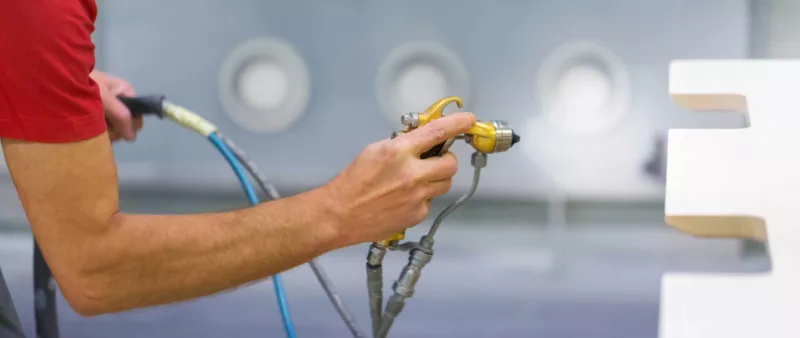
- Sector: Paint & coatings
- Main issue: A German company making coats for cosmetic packaging had to remove VOCs from air emissions generated by spraying booths and drying processes. They had to reduce VOC concentration from 80 to 50 mgC/m³ (TA Luft limit). Failure to do so could mean forced closure.
- Benefits of DESOTEC solution: To handle their very high flow rate (55000 m³/hour), we recommended two AIRCON V-XL filters in a lead-lag configuration. This means that when the first filter becomes saturated, VOCs will be picked up by the second unit. The first filter is then exchanged for a fresh one, and placed behind the second up and running unit. After our intervention, local authorities have withdrawn the threat to cancel the plant’s permit.
Read more here.
-

Our filtration solutions
We offer a wide range of filter models and carbon grades to suit your industrial water or air purification requirements. -
VOCs and Solvents
It’s vital to reduce VOCs and solvents in air emissions to protect occupational health, maintain air quality, and avoid contributing to climate change. -

Industries we help
We partner with companies in a variety of sectors, adapting our modular filtration solutions to your unique needs.