Surfactant & Foaming Agent Removal
About
Surfactants and foaming agents have a huge range of industrial uses, so it’s essential to find versatile and reliable wastewater purification solutions. DESOTEC simple and sustainable mobile water treatment services remove harmful molecules and ensure wastewater is fit for discharge or reuse.
Industrial wastewater purification
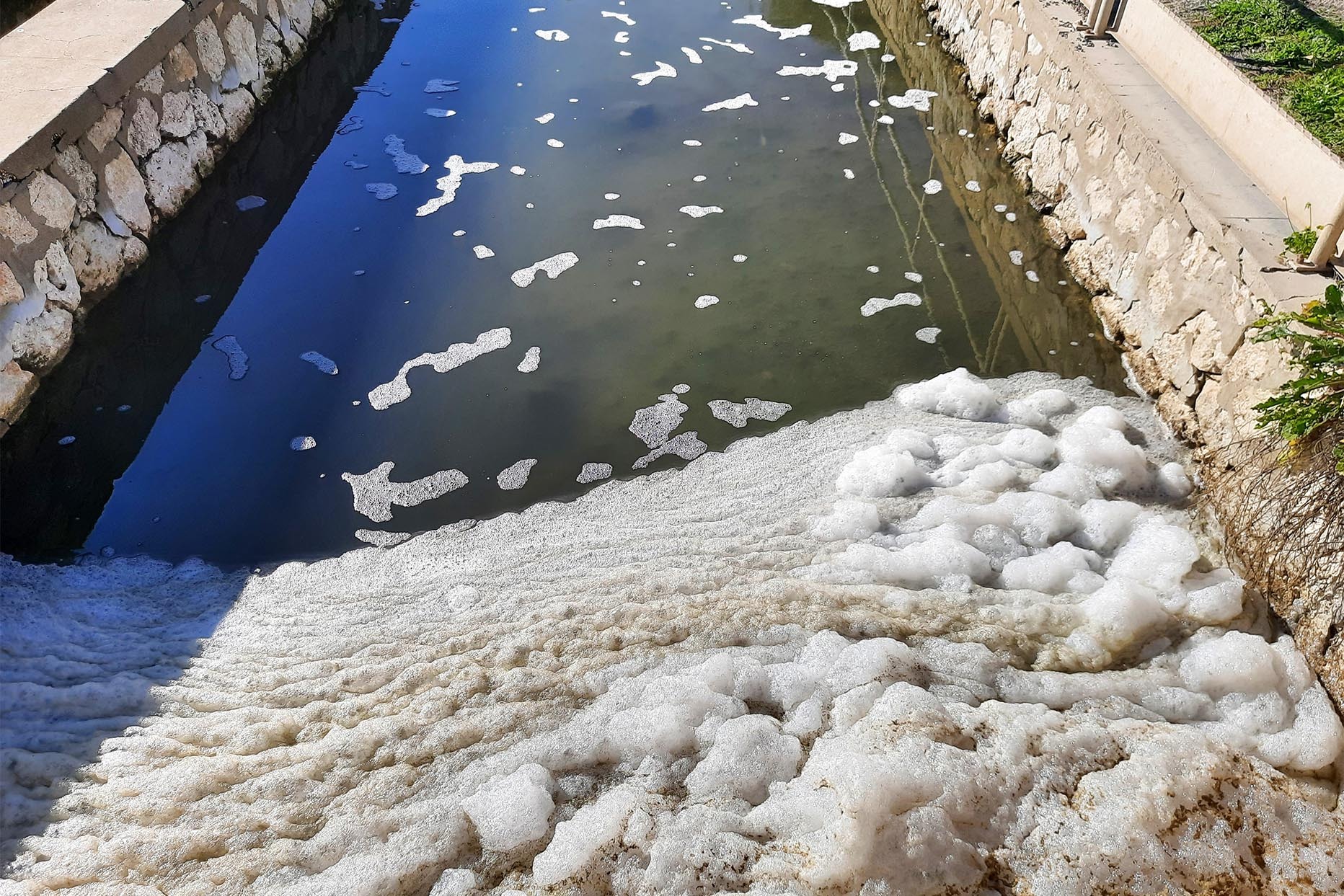
Surfactants and foaming agents are found mainly in detergents and cleaning products. They’re also used in lubricants, inks, anti-fogging liquids, herbicides, adhesives, emulsifiers, and fabric softeners. Therefore, a wide range of industrial sectors may produce wastewater containing surfactants, particularly from cleaning processes. Left untreated, these compounds have a very high visual impact. They create foaming and scum on the surface of waterways, most commonly spotted around sewage outlets. Prompt and effective treatment is essential to avoid complaints from the public and action from the environmental authorities. DESOTEC’s mobile activated carbon filters successfully remove surfactants and foaming agents. They may be placed after your on-site biofilter as a polishing step, ensuring your industrial wastewater is pure enough for discharge into our natural environment. Where concentrations are too high to be handled by a wastewater treatment plant (WWTP), our solutions act as a pre-treatment.

COD, POPs, and our environment
As well as being unsightly, surfactants must be removed to protect aquatic life and human health. Anionic surfactants such as sodium dodecyl sulfate (SDS) and sodium lauryl sulfate (SLS) decrease the surface tension of water and increase the solubility of other pollutants. Previously, some surfactants contained persistent organic pollutants (POPs), such as poly- and perfluoroalkyls (PFAS), which are toxic and bioaccumulative. They are now heavily controlled to avoid degrading bacteria and harming fish as well as protecting the human food chain. It’s also important to reduce chemical oxygen demand (COD) in wastewater to keep waterways aerated and thriving. DESOTEC has simple and sustainable solutions. Our activated carbon filters for wastewater work as complete treatments or in combination with other technologies to reduce such compounds to below detectable levels. As they are mobile and delivered rapidly, DESOTEC filters are also well suited to temporary or emergency situations as well as to long-term usage.
Water reuse after surfactant removal
Adsorption is recognised as the simplest yet most effective solution for removing surfactants and foaming agents. DESOTEC’s activated carbon filters adsorb them effectively, making wastewater safe for discharge to WWTPs or potentially even directly to waterways. This saves your firm the cost of specialist disposal. Alternatively, your company might reuse its treated wastewater, improving the circularity of your industrial processes and helping you reach your green goals.
It’s vital that industry takes wastewater purification action to protect aquatic ecosystems and human health. With DESOTEC’s mobile sustainable filters, it’s simple to remove surfactants and foaming agents from wastewater, helping you keep waterways clean and flourishing.
Helping you comply
Regulations vary according to country and region, with central EU regulations forming a backstop. Legislation is becoming increasingly restrictive, so it’s vital to future proof your firm today. DESOTEC’s mobile water treatment filters are modular, making it simple to adapt set-ups to changing regulations and purification requirements.
Frequently Asked Questions about Surfactants & Foaming Agents
-
Surfactants and foaming agents are found in cleaning products, detergents, inks and adhesives, and must be removed from wastewater to protect our waterways and human health. Discharged to the environment, they have a highly visual impact: they cause scum or foam on waterways, leading to public complaints. They also contribute to chemical oxygen demand (COD), harming aquatic life.
Some ionic surfactants such as sodium dodecyl sulfate (SDS) increase the solubility of other compounds, worsening pollution. Older surfactants often contained persistent organic pollutants (POPs) or per- and polyfluoroalkyl substances (PFAS) that are toxic and bioaccumulative, posing a risk to aquatic and human health.
-
Activated carbon filtration reduces scum or foam caused by surfactants and foaming agents to below detectable levels, protecting our waterways and our health. It can be a standalone technology, used as a pre-treatment to bring down compounds to the acceptance limits for a wastewater treatment plant (WWTP), or sited downstream from biofilters as a polishing step.
Activated carbon technology is simple, effective and flexible, capable of handling varying concentrations, compounds and flow rates. DESOTEC’s mobile filters solution is modular, so your company can add or remove filters if parameters change.
-
Activated carbon filtration is a reliable technology to enable your company to comply with legislation around surfactants and foaming agents, including EU regulations. DESOTEC has regional know-how and reliable technology to help your business stay compliant at all times. In emergency situations, such as public complaints, we can deliver our filtration solutions fast. Compliant filtration waste handling is included in our service, sparing you the trouble.
-
Activated carbon is a highly effective solution to purify wastewater of surfactants and foaming agents, and mobile filtration is often the most cost-effective and sustainable option – but it does depend on various factors.
For example:
- Where water flow is intermittent, activated carbon is generally more cost-effective than alternatives.
- If space is tight, DESOTEC filters have a smaller footprint than most alternatives.
- For short-term usage, our filters are mobile and rental – unlike more permanent installations.
- If treatment is needed immediately, our filters can be delivered fast and are plug-and-play – some alternatives have a lengthy lead-in time.
- If your needs might change in the future, our systems are modular – other technology might be less adaptable.
DESOTEC is keen to help customers find the best treatment for their needs, and our experts will tell you if they think an alternative technology might be more suitable than activated carbon.
-
Activated carbon is a very versatile technology, so there are many ways to optimise set-ups – e.g. placing filters in series, using different carbon grades, or combining filters with complementary technology.
DESOTEC’s experts carry out testing, advise on set-up design, and offer ongoing support as part of our full-service solution. Our activated carbon filtration solutions have a low total cost of ownership (TCO): they have minimal Capex costs, and our service includes maintenance, upgrading, and sustainable carbon waste handling. Thanks to our circular approach, waste carbon is reactivated wherever possible, cutting your costs and helping you reach your green goals.
How we help you
DESOTEC’s sustainable mobile filtration solutions
Firms which use surfactants and foaming agents need partners they can trust. DESOTEC is ready to help. Our activated carbon filters for wastewater handle a wide range of flow rates, components, and concentrations, and our engineers offer round-the-clock support. Filters are supplied on a rental basis, minimising capex costs. It’s easy to add or remove filters to meet changing production needs or stricter legislations. As part of our full-service solution, we remove all filtration waste in closed filters away from your sites and destroy adsorbed molecules in our furnaces. Carbon is reactivated wherever possible, making this a cost-effective and sustainable solution.
DESOTEC filters have been very effective in purifying our wastewater. Thanks to this simple but effective set-up, we’re now in compliance with environmental limits.
Our filtration solutions
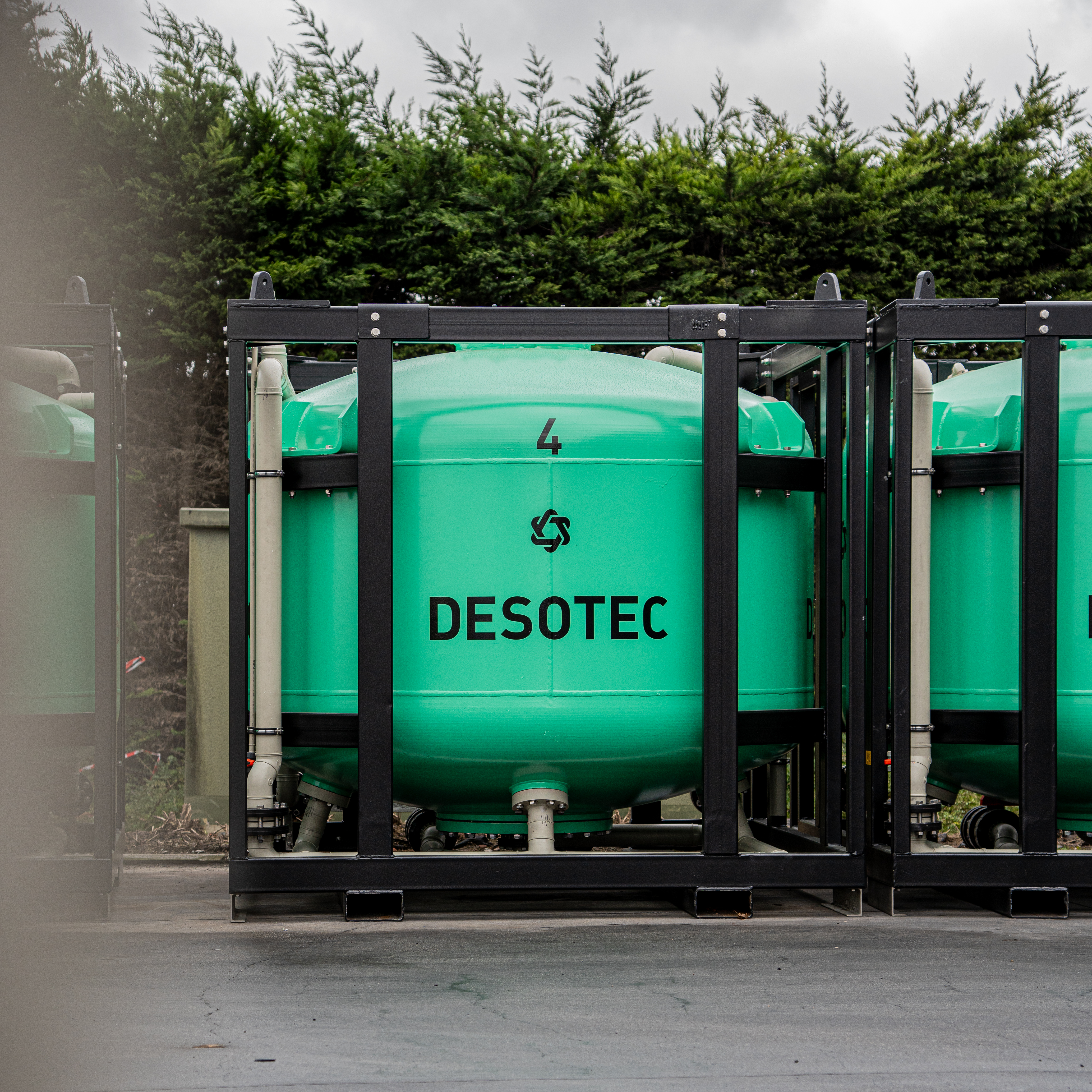
Flexible, mobile solutions configured to meet your industrial purification needs. With sustainable waste management included, it’s easy to reach your green goals.
-
Industries we help
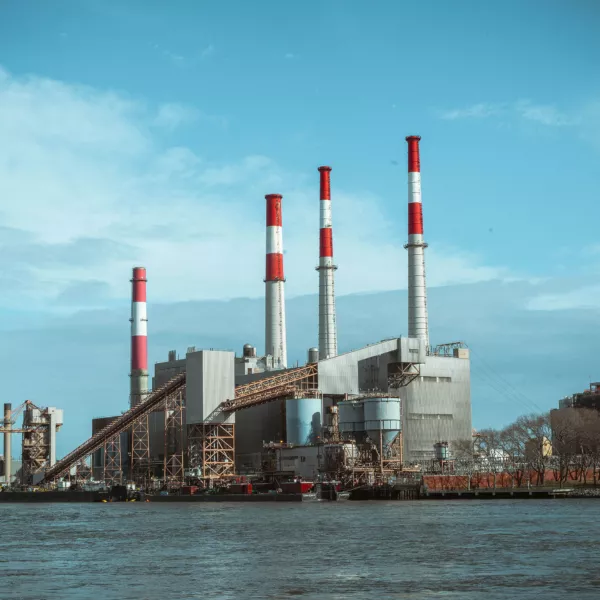
We partner with companies in a variety of sectors, adapting our modular filtration solutions to your unique needs. -

Our unique service
Our closed-loop, full-service model is as unique as your business needs. We’ll define the right filtration setup and safely recycle filtration waste, making it easy to go green. -

Your sustainability journey
We care about protecting our air, water and soil for future generations, just like you. Our filtration solutions help you meet environmental standards, reducing your carbon footprint.