Restricted Chemicals
About
Companies that handle restricted chemicals need reliable solutions to protect workers’ safety, the local community, and the environment. DESOTEC has the answers: our full-service mobile filtration solutions remove substances of very high concern (SVHC), carcinogenic, mutagenic, and reprotoxic (CMR) chemicals, and persistent organic pollutants (POPs) from air and water in a safe and sustainable manner.
What are SVHCs, CMR chemicals, POPs and PFAS?
As scientific knowledge advances, we’re gaining a greater understanding of the need to protect health and the environment from certain chemicals. Fortunately, technology is also improving and DESOTEC offers innovative treatment solutions.
Substances of very high concern (SVHC) have serious and often irreversible health and environmental effects. Many pesticides, hormones, antibiotics, and industrial chemicals contain SVHCs.
Carcinogenic, mutagenic, and reprotoxic (CMR) chemicals are carcinogenic (causing cancer), mutagenic (causing changes to genetic materials), or reprotoxic (harming the reproductive process). They include benzene, acrylonitrile, and dichloromethane.
Persistent organic pollutants (POPs) are also known as “forever chemicals” because they break down extremely slowly in nature. These compounds harm aquatic life and may enter the human food chain. Some are now banned, such as dichlorodiphenyltrichloroethane (DDT), polychlorinated biphenyls (PCBs), and perfluorooctane sulfonic acid (PFOS). PFOS is only one of the thousands per- and polyfluoroalkyl substances (PFAS) which have quietly permeated our world and infiltrated every corner of our environment, reaching even drinking water sources. With new studies unearthing the potential negative effects on human health of PFAS’ excessive exposure, the EU persistent organic pollutants (POPs) regulation is restricting the use and emission limits of these molecules, among others, in industrial wastewater and air emissions.
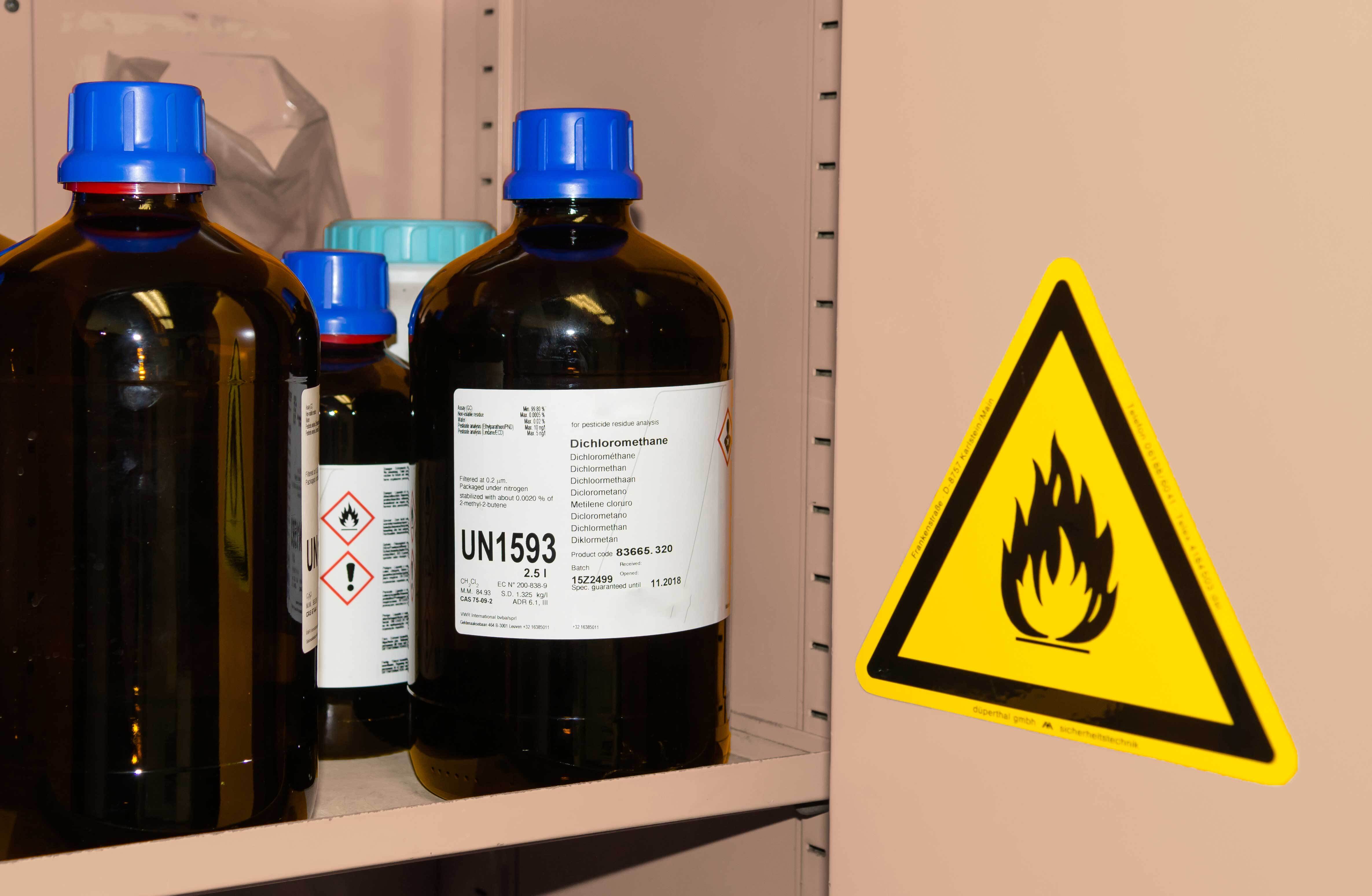

Air emissions and wastewater from restricted chemicals
While the usage of SVHCs is restricted, some are unavoidable, such as dioxins and furans which are combustion by-products. Other common SVHCs include pesticides in the agricultural sector and hormones in pharma.
DESOTEC can help. Our air purification solutions are a sustainable alternative to regenerative thermal oxidisers (RTOs) and are more suitable for discontinuous production.
We also offer industrial water treatment for contaminated wastewater. Many restricted chemicals are adsorbable organic halogens (AOX), for which the activated carbon used in DESOTEC’s filters is certified as a Best Available Technique (BAT). Activated carbon filtration is also one of the most efficient and proven technologies to remove PFAS.
The closed design of all our filters means that there’s no need to manipulate waste on site, even during filter exchange.
Land remediation for POPs
Although many POPs, including PFAS, are heavily restricted today, they have left a legacy of contaminated land and groundwater at former industrial sites. Spills of creosote, petrochemicals, pesticides, and dry-cleaning fluids may all contain POPs.
DESOTEC is here for your firm. We partner with remediation companies, supplying filters that treat pumped-up groundwater or air emissions from excavated or thermally treated soil.
Our filters are mobile and have a small footprint, making them well suited to temporary projects at busy construction sites. If you discover POPs, including PFAS, unexpectedly, we can supply filters at short notice so your project can continue without delay.
This case study illustrates how DESOTEC mobile activated carbon treated and eliminated PFAS from groundwater.
Today’s industry is greener and safer than ever and it’s rising to the challenges posed by restricted chemicals. DESOTEC's full-service sustainable mobile filtration solutions can help you protect people and the planet.
Complying with POPs & other regulations
Restricted chemicals are subject to tight regulation by the European Chemicals Agency (ECHA), even at very low concentrations. Once a chemical is included in the ECHA’s list of SVHC, the EU REACH legislation will mandate companies to verify whether their emissions contain it.
Many countries, including France, oblige construction companies to treat POPs if they find them during excavations.
To ensure full compliance with the stringent EU POPs regulation, DESOTEC has devised a validated method in collaboration with VITO laboratories to accurately measure the level of PFAS adsorbed on activated carbon.
If the PFAS concentration on the spent carbon is below the established limits outlined in the European POPs Regulation, the saturated carbon will be subject to a thermal reactivation process at DESOTEC’s facilities. This route reactivates the carbon while breaking PFAS down completely and safely, thus destroying it for good and avoiding their release in the environment.
However, when the PFAS concentration exceeds the EU POP limit, it is not allowed to reactivate the spent activated carbon in Europe. In that case, it will be transported to a specialised external party, ensuring safe and compliant treatment.
Frequently Asked Questions about SVHCs, CMR chemicals, POPs and PFAS removal
-
Certain chemicals are subject to very strict legislation on health and environmental grounds, including: substances of very high concern (SVHCs); carcinogenic, mutagenic or reprotoxic (CMR) chemicals; persistent organic pollutants (POPs); and per- and polyfluoroalkyl substances (PFAS). Unless treated, many bioaccumulate in the environment, posing a risk to aquatic life and waterways and entering the human food chain or drinking water.
Many, such as the PFAS chemical perfluorooctanesulfonic acid (PFOS), are now banned, but are still found in contaminated groundwater and water courses. Others are unavoidable by-products, such as furans from the combustion process. And others are in use due to the benefits they bring, e.g. hormones in pharmaceuticals or pesticides in agriculture. However, all must be reduced to below detectable levels in wastewater, groundwater or air emissions to protect occupational health and safety and the environment.
-
Activated carbon is recognised as the Best Available Technology (BAT) for the removal of adsorbable organic halides (AOX), which include many restricted chemicals such as drug residues from pharmaceutical production. It is also proven to be efficient in treating PFAS and other ‘forever chemicals’ or POPs. DESOTEC’s activated carbon filters can be standalone or combined with other technologies to maximise efficiency and bring down levels of restricted chemicals to below detection.
-
Activated carbon is widely used to treat historic leaks or spills of restricted chemicals during remediation work at former industrial sites, keeping complex construction projects on track.
DESOTEC delivers mobile activated carbon filters fast to start work immediately. Our filters treat pumped-up groundwater, ready for specialist disposal or discharge to the environment. They can also be used to purify air emissions from the soil excavation process or the thermal treatment of soil. We safely handle all filtration waste, including PFAS, as part of our service, saving your company the hassle and allowing your project to run smoothly.
-
Activated carbon filtration is an effective and reliable way to achieve compliance with stringent laws such as the EU’s POPs Regulation and the ECHA’s REACH Regulations. PFAS in particular are heavily restricted in the EEA, and becoming more so across the world. Additionally, many countries already oblige companies to remediate soil and groundwater if restricted chemicals are found during construction work.
DESOTEC offers reliable plug-and-play solutions that can be delivered fast in urgent situations, such as the unexpected discovery of PFAS in groundwater. We have regional expertise to guide your company in meeting the terms of your operating licence and relevant laws. Compliant, sustainable waste handling is included in our service, where captured contaminants are safely destroyed for good.
-
Activated carbon is a Best Available Technology (BAT) for many pollution abatement applications, and mobile filtration solutions are often the most cost-effective and sustainable option – but it does depend on various factors.
For example:
- Where air or water flow is discontinuous, activated carbon is generally more cost-effective than alternatives.
- If space is tight, e.g. at building sites, DESOTEC filters have a smaller footprint than most alternatives.
- For short-term usage, our filters are mobile and rental – unlike more permanent installations.
- If treatment is needed immediately, our filters can be delivered fast and are plug-and-play – some alternatives have a lengthy lead-in time.
- If your needs might change in the future, our systems are modular – other technology might be less adaptable.
DESOTEC is keen to help customers find the best treatment for their needs, and our experts will tell you if they think an alternative technology might be more suitable than activated carbon.
-
Activated carbon is a very versatile technology, so there are many ways to optimise set-ups – e.g. placing filters in series, using different carbon grades, or combining filters with complementary technology.
DESOTEC’s experts carry out testing, advise on set-up design, and offer ongoing support as part of our full-service solution. Our activated carbon filtration solutions have a low total cost of ownership (TCO): they have minimal Capex costs, and our service includes maintenance and upgrading.
Sustainable, safe filtration waste treatment is included in DESOTEC’s service, sparing your company the worry and cost of specialist disposal. We transport saturated carbon away from your site in closed filters, keeping your facilities clean and your workers safe. It is then thermally treated in our furnaces, destroying restricted chemicals completely so the problem is resolved for good.
-
DESOTEC has collaborated with the Belgian lab VITO on a reliable method (CMA/3/D) to measure PFAS on carbon to determine the best course of treatment. If it is below the limit set in the POPs Regulation, the carbon can be treated in our furnaces and reactivated for reuse. Our state-of-the-art flue gas treatment completely destroys PFAS to below detectable levels. If PFAS levels are above the POPs limit, the spent carbon is sent to a specialist company for safe disposal. Either way, we ensure the PFAS problem is not just shifted away from your site – it is fully eliminated.
How we help you
DESOTEC sustainable mobile filtration solutions
Companies dealing with restricted chemicals, such as PFAS or other SVHCs, need purification solutions they can trust. DESOTEC’s mobile activated carbon filtration services are the answer.
Activated carbon filtration works on its own or combined with other treatments to reduce PFAS, POPs, and SVHCs to extremely low or even zero levels.
The handling of filtration waste is part of our service and safe. We have the expertise, equipment, and permits to do so safely. Saturated carbon is transported in closed filter units away from your site. All adsorbed molecules are destroyed in line with EU and local legislations. Carbon is reactivated where possible according to the POPs regulation, making this solution both cost-effective and sustainable. By using a safe, law-compliant, and environmentally responsible technology, DESOTEC is helping the industry get rid of these chemicals, forever.
For our new plant, we needed a reliable wastewater treatment process. DESOTEC helped us set up the best possible installation, given the complexity of our process. We are very pleased with the result.
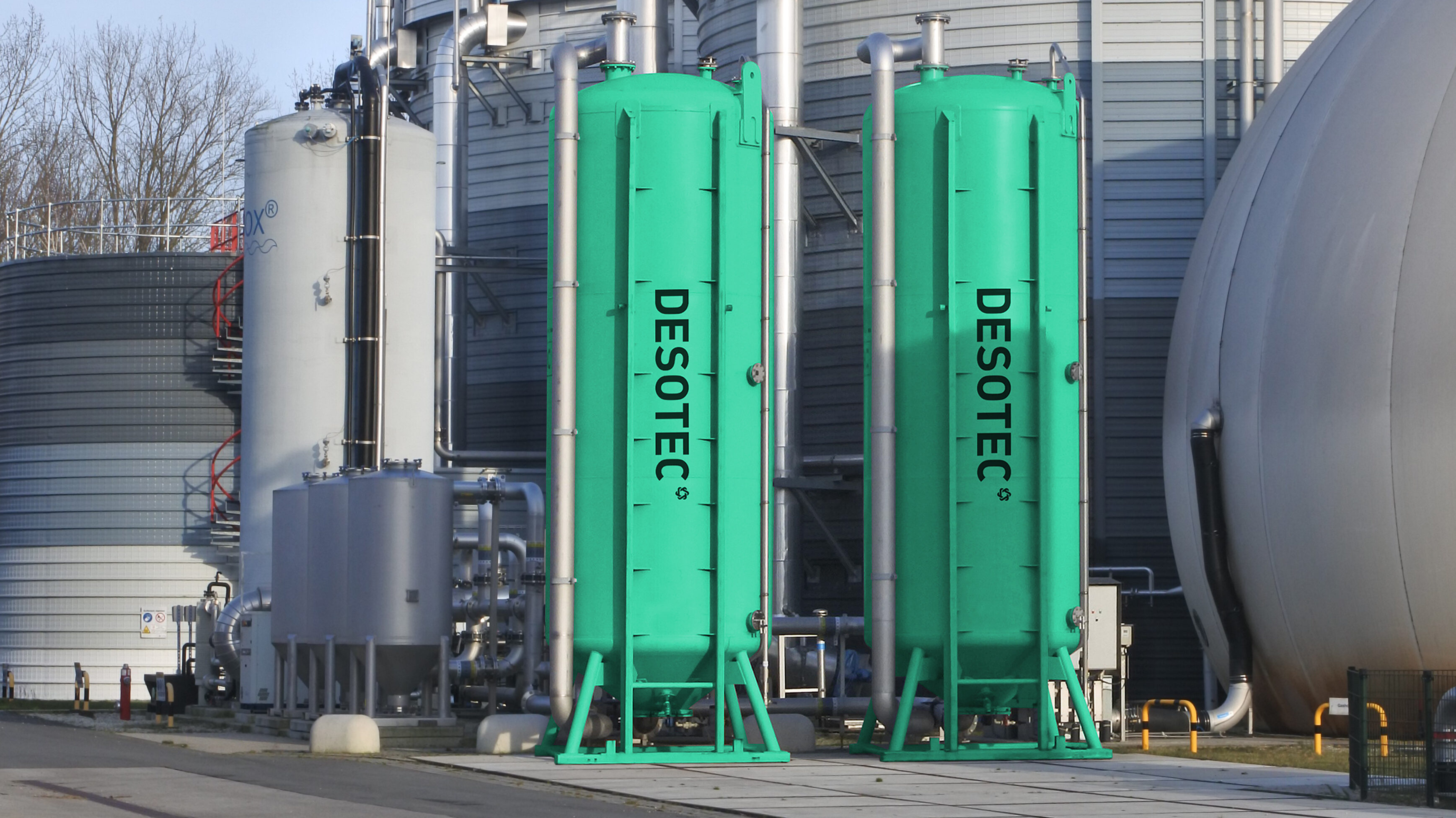
Our filtration solutions
Mobile, modular industrial filtration that lets you focus on your business. Sustainable waste handling and round-the-clock support are included for a hassle-free service.
-
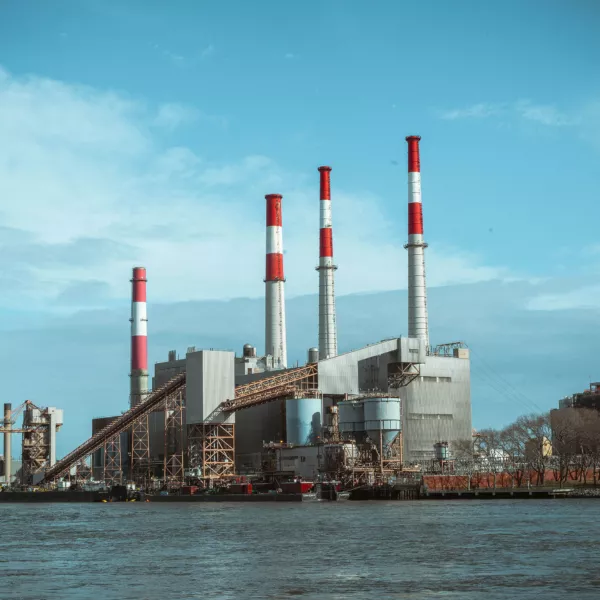
Industries we help
We partner with companies in a variety of sectors, adapting our modular filtration solutions to your unique needs. -

Our unique service
Our closed-loop, full-service model is as unique as your business needs. We’ll define the right filtration setup and safely recycle filtration waste, making it easy to go green. -

Your sustainability journey
We care about protecting our air, water and soil for future generations, just like you. Our filtration solutions help you meet environmental standards, reducing your carbon footprint.