Tackling emissions in the textiles industry
From dyeing to finishing, textile production generates a wide range of emissions, from VOCs and odours to COD, AOX, microplastics and PFAS. As regulations tighten, the pressure to reduce environmental impact is rising. Explore how DESOTEC’s mobile filtration solutions help companies from the textile sector treat air and water emissions across the value chain.
Typical emissions from the TULAC industry
Textiles are only one thread of a fabric called TULAC, which stands for “Textiles, Upholstery, Leather, Apparel, and Carpets” - a sector combined by the European Law Makers. Before delving into the regulations affecting TULAC companies, let’s look at the main emissions generated by this sector.
COD
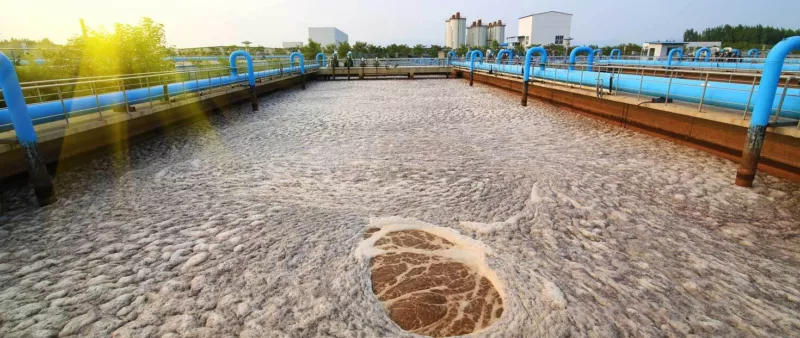
Chemical oxygen demand (COD) includes a series of substances in wastewater which can be removed via oxidation. These include solvents and processing chemicals, e.g. for curing, which can be strictly regulated by Persistent Organic Pollutants (POPs), and many other pollutants. If not removed from textile process wastewater, COD can harm marine wildlife. In addition to this, COD could also disrupt bacteria in wastewater treatment biofilters.
Phenols
Phenols are organic substances which are found in a huge range of products, including textiles and dyes. Their concentrations in wastewater must be reduced to very low levels to protect human and animal health.
AOX
Adsorbable organic halides (AOX) are components containing chlorine, bromine, or iodine that are used in textile processing (e.g., bleaching, dyeing, finishing). Most AOX are chlorinated, including dichloromethane (DCM), trichloromethane (chloroform), chlorophenols, chlorobenzene, etc. Some AOX components are not biodegradable. Among these are POPs such as polychlorinated biphenyls (PCBs) and dioxins.
Per- and polyfluoroalkyl substances (PFAS)
The TULAC industry accounts for a third of all PFAS used (mostly PTFE membranes in outdoor clothing). Although there are no set emission limits yet on PFAS, TULAC businesses could future proof their activities against upcoming restrictions.
Microplastics
As the name suggests, microplastics are small in particle size (between 1 μm to 5 mm) fragments of plastic. Recent studies showed that microplastics are released across the whole TULAC value chain. Moreover, some research highlighted that current wastewater treatments are not able to capture microplastics.
VOC
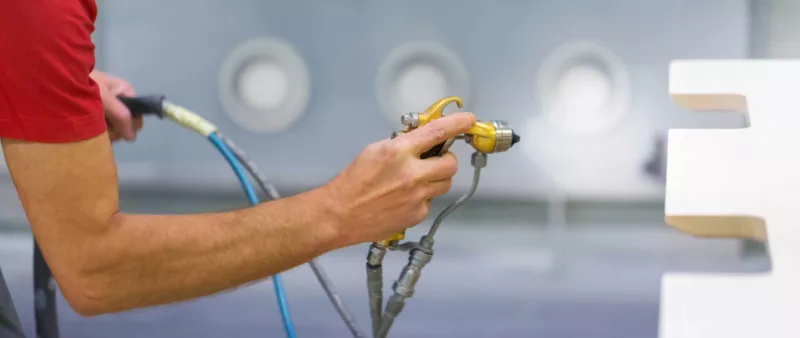
Volatile organic compounds (VOCs) are hydrocarbons that evaporate at low temperatures and may be found in the exhaust air of production processes. Some of the most common VOC include solvents, BTEX (benzene, toluene, ethylbenzene and xylenes), siloxanes and terpenes. With regards to textile manufacturing, VOC could arise from a series of processes such as dyeing, finishing, printing, and fixing.
H₂S
Even at low concentrations, hydrogen sulphide’s rotten egg smell causes odour nuisances. When using sulphur-based compounds, textile dyeing can give rise to H2S emission as a by-product.


Which EU regulations do TULAC companies have to comply with?
In August 2024, the revised IED entered into force, introducing a series of emission limits for multiple sectors, including TULAC. Around 300 existing EU textile plants will have four years to meet these more stringent requirements, whereas new facilities must comply immediately.
The practical implementation of the IED for textile producers is translated into these best available technique (BAT) conclusions.
Your company should conform to BAT conclusions if its activity falls within the following:
- Pre-treatment or dyeing of textile fibres or textiles (only if treatment capacity > 10 tonnes per day);
- coating;
- dry cleaning;
- fabric production;
- finishing;
- lamination;
- printing;
- singeing;
- wool carbonising/fulling;
- spinning of fibres (other than man-made fibres);
- washing or rinsing associated with dyeing, printing or finishing.
The new BAT-associated emission levels (BAT-AELs) for typical emissions generated by the TULAC sector are relatively low:

TULAC businesses should also be aware of the Extended Producer Responsibility (EPR) concept in the Circular Economy Act, supporting various legislations. Although EPR schemes don’t directly impose emission limits, they do mandate companies to take care of their operations’ impacts including their products’ end-of-life treatment.
How to remove emissions from the TULAC sector
Wet Scrubbing
Relying on a chemical process called absorption, wet scrubbing has been widely used for treating emissions across different sectors, including TULAC. However, scrubbing units are prone to corrosion and clogging, thus requiring regular maintenance. This obviously translates into higher operation costs. In addition to this, scrubbers can be less efficient when very low VOC emission levels are targeted. Accordingly, a polishing step (e.g., activated carbon filtration) is often needed downstream.
Membrane Separation
Membranes can selectively capture some compounds out of a liquid phase. A typical application of membranes in the TULAC industry is color removal from wastewater. On the other hand, membranes can easily get clogged or fouled. Therefore, plant operators have to integrate their purification system with an upstream pre-treatment such as an activated carbon filter to prevent membrane fouling.
Activated Carbon Filtration
Activated carbon is recommended by the EU as one of the best available techiques (BAT) to treat emissions generated by textile manufacturing. Thanks to its tunable porous structure, activated carbon can adsorb a wide range of pollutants. Combining activated carbon with mobile filters, DESOTEC has fulfilled the purification needs of several TULAC businesses. Some of these real-world applications are outlined in the section below.
Case studies
Removing COD & phenols at a tannery in central France
A French tannery had to reduce COD & phenols concentrations in its wastewater from 5,559 to 3,000 ppm and from 12 to 0.3 ppm, respectively. After being contacted by the customer, DESOTEC suggested installing a MOBICON filter and now the plant meets their discharging limits.
Helping the luxury goods industry remove VOC
A luxury goods manufacturer needed to remove VOC from 9 connected airstreams, for a total flow rate of over 38,000 m3/h. Overall, the company’s air emissions were contaminated with 25 substances, including ketones and alcohol. Once assessed the situation, DESOTEC put in place a single AIRCON V-XL. This allowed efficiently reducing VOC concentration from 110 to 20 mg/m3 - within the legal limits set for this plant.
Supporting the UK furniture sector
A company producing furniture foam in the UK generates air emissions containing toluene diisocyanate (TDI) and other isocyanates. In collaboration with Lybover, DESOTEC supplied a complete purification system. Our solution, consisting of 2 AIRCON V-L, allowed the company to meet their permit requirements.
Brightening colour production in Belgium
A worldwide provider is making fluorescent pigments (65% of market share) for colouring textiles. Recently, they built up a new plant to expand the production of non-fluorescent pigment. Accordingly, the Belgian company needed a cost-effective system to treat VOCs (mostly formaldehyde, but also BTEX, isocyanates and others). For batch-processes like these, VOC emissions occur in peaks and treating these discontinuous discharges can be very energy-intensive when using traditional techniques like thermal oxidation. Therefore, the company reached out to DESOTEC for a more cost-efficient solution. By putting two AIRCON filters in series, we maximised the removal efficiency at all times (both high and low VOC concentration peaks), allowing for compliant production.
Textile recycling
It’s no longer sustainable to design textile production without thinking about recycling. In line with the new EU circular economy act, recycling will be playing a key role also in the TULAC industry. Although the market is still in its infancy, DESOTEC’s purification solutions are ready to remove pollutants from recycling facilities’ emissions.
Similar to post-consumer plastics, recycled textiles often contain residual dyes, microplastics, and chemical additives that can contaminate the process solvent and reduce the recycled material’s quality. Process liquids generated during mechanical or chemical recycling often require advanced purification technologies to remove these impurities.
In this article, we explain how DESOTEC’s mobile activated carbon filtration provides recyclers with an efficient and sustainable way to remove contaminants from wastewater, process effluents and product streams. This not only improves the quality of recycled materials but also ensures compliance with environmental regulations, supporting a cleaner and more circular textile value chain.
Conclusions
Tighter regulations will increasingly put TULAC businesses in the spotlight. To avoid potential fines and production disruptions, companies have to invest in a cost-effective purification solution.
As showcased in this article, activated carbon filtration can help you future-proof your plant.
-
COD & BOD
By complying with BOD and COD limits, companies ensure that waterways and WWTP biofilters remain healthy -
VOCs and Solvents
Reducing VOCs and solvents in air emissions is essential to protect occupational health, maintain air quality, and avoid contributing to climate change. -

Our Filtration Solutions
We offer a wide range of filter models and carbon grades to suit your industrial water or air purification requirements.